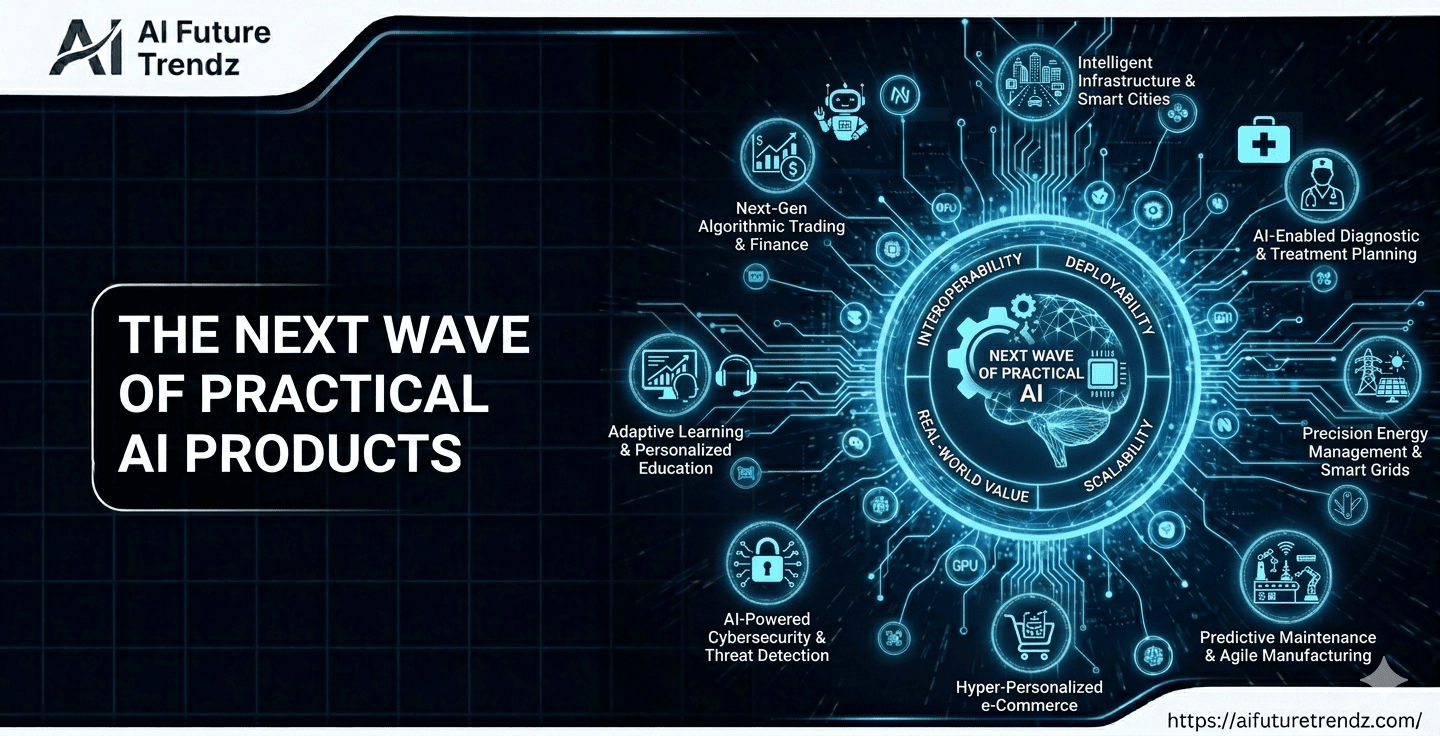
For the past few years, artificial intelligence has been mostly about chatbots and content tools. They were exciting. They wrote essays, answered questions, and created images in seconds. But now, in 2026, something bigger is happening.
The next wave of AI is not about flashy demos. It’s about real, everyday usefulness. AI is slowly becoming part of our daily routines — at work, at home, and inside the devices we use every day. You won’t always notice it. And that’s exactly the point.
Key Takeaways
- AI is increasingly being embedded directly into devices like laptops and smartphones through specialized hardware such as NPUs.
- AI systems are evolving from simple chatbots into autonomous agents capable of completing multi-step tasks.
- Businesses are integrating AI into real operational workflows across industries such as finance, retail, and manufacturing.
- Specialized industry-specific AI models are emerging to handle tasks like healthcare analysis and legal contract review.
- Governments are building sovereign AI infrastructure to ensure data control, regulation, and local language support.
- Human roles are shifting from performing tasks to supervising and managing AI systems.
AI Is Moving Into Everyday Devices
AI is no longer limited to websites or chat windows. It is being built directly into devices. New laptops and PCs now ship with Neural Processing Units (NPUs) capable of over 50–80 TOPS (Trillion Operations Per Second), allowing AI to run locally rather than in the cloud.
Smartphones are also getting smarter. They can summarize long notifications, draft replies, organize photos, and automate small tasks inside the system. You don’t need to open a separate chatbot anymore. AI is becoming part of the operating system itself.
From Chatbots to AI Agents
Earlier AI tools mostly responded to prompts. The next generation is designed to handle multi-step tasks. AI agents are being developed to schedule meetings, manage emails, generate reports, analyze data, and work across multiple applications.
Instead of asking one question at a time, users can assign a goal and let the system complete several steps automatically. This shift from answering questions to completing real tasks is one of the most important changes happening in AI today.
Enterprise AI Is Becoming Operational
Businesses are moving beyond experiments. AI is being integrated into real workflows. Retail stores are using AI voice systems to assist customers. Manufacturing companies are applying AI in supply chain optimization.
Financial institutions are using AI for fraud detection and compliance. Developers are using AI coding assistants daily. AI is no longer a side project. It is becoming part of core operations.
Industry Specific Models
The “one model fits all” idea is fading. While general AI systems still exist, companies are now building specialized AI tools for specific industries.
In healthcare, AI helps analyze scans and medical data in rural areas where specialists aren’t always available. It assists doctors instead of replacing them. In legal services, AI focuses on contract review. It can detect clause conflicts, compliance risks, and missing terms that general AI systems might overlook.
Sovereign Infrastructure
Governments are also taking AI seriously. Many countries are building sovereign AI infrastructure. This means developing national AI systems that store data locally and follow regional laws.
For example, India is investing in AI networks that understand regional dialects and local cultural contexts. This ensures technology fits the needs of citizens and public services. The next wave of AI is not just global. It’s local, regulated, and aligned with national priorities.
AI Oversight Roles
As AI systems become more independent, human roles are changing. Instead of doing every task manually, people are now supervising AI systems. Employees guide the process, review outputs, and correct mistakes. This doesn’t remove humans from the equation. It changes their role. Professionals are becoming AI managers and orchestrators. They focus on strategy and decision-making while AI handles repetitive execution.
The Trust Threshold
As AI becomes more powerful, trust becomes critical. Companies can’t just deploy AI and hope it works. They’re adding guardrails - software layers that monitor AI actions in real time.
These guardrails detect hallucinations, policy violations, and high-risk actions before they impact customers or systems. In 2026, accountability is no longer optional. It’s built into the design. AI must be reliable, transparent, and controlled.
Conclusion
Analysts estimate that enterprise AI spending will cross hundreds of billions of dollars by the end of the decade.
The next wave of practical AI products is defined by integration and usefulness. AI is becoming embedded instead of separate. It is completing tasks instead of just having conversations. It is being built into systems instead of standing outside them.
This phase is less about hype and more about execution. AI is slowly becoming infrastructure - similar to how cloud computing became essential over time.
The transformation will not come from one viral app. It will come from thousands of practical AI systems quietly improving everyday work and everyday life.